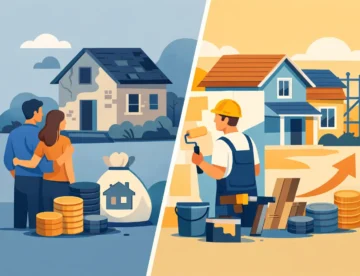
Some houses are not really listing-ready, and some sellers are not in a position to wait. If you’re thinking about selling house as is without realtor, you’re probably trying to solve a real problem fast – repairs you cannot afford, a move you did not plan, an inherited property, a divorce, or a house that has simply become too much to manage.
That kind of sale can absolutely work. But it helps to be honest about what “as is” means, what selling without an agent puts back on your plate, and which path gives you the best mix of speed, price, and certainty.
What selling house as is without realtor really means
Selling a house “as is” means you are offering the property in its current condition. You are not promising to make repairs before closing, and you are not marketing it as updated or move-in ready if it is not. The buyer takes the home with its current issues, whether that means an old roof, outdated systems, water damage, foundation concerns, or a long list of cosmetic problems.
Selling without a realtor means you are also handling the process yourself or working directly with a buyer. That usually includes setting expectations, sharing property details, coordinating access, reviewing offers, and making sure the paperwork and closing process stay on track.
Those two choices often go together for one reason: convenience. Homeowners in stressful situations usually want fewer moving parts, not more. They want a clear offer, a realistic timeline, and a way to move on without pouring more money into the property.
Why homeowners choose this route
Most people do not wake up excited to skip repairs, avoid showings, and sell off-market. Usually there is a reason. The house may need more work than the owner can handle. The seller may be behind on payments, dealing with probate, helping a parent move, or trying to relocate quickly for work or family.
In those situations, the traditional listing process can feel like one more burden. Cleaning, staging, open houses, inspection requests, buyer financing delays, and agent commissions all take time and energy. For some sellers, that process is still worth it. For others, the faster and simpler option matters more.
That is especially true when the property has issues that will scare off retail buyers or lead to long negotiations later. If the furnace is failing, the basement leaks, or the house has been vacant, “as is” can be the most realistic way to price and present it.
The biggest trade-off: speed and simplicity vs. top-dollar price
This is the part sellers need to hear clearly. Selling as is without a realtor may save you time, repairs, prep work, and commission costs, but it does not always produce the highest possible sale price.
A fully updated home exposed to the open market will often attract stronger offers than a distressed property sold quickly and privately. But that comparison is not always fair. If getting the home ready would cost tens of thousands of dollars, take months, and create more stress than you can carry, the “higher price” may not be higher in real life.
What matters is net outcome. How much cash do you walk away with after repairs, holding costs, cleanup, commissions, concessions, and delays? How much certainty do you need? How quickly do you need the sale to close? Those questions usually matter more than the headline number alone.
Your main options when selling as is
If you want to avoid a realtor, you generally have two realistic paths. You can sell the property yourself to an individual buyer, or you can sell directly to a cash buyer.
Selling it yourself can work if the home is still financeable, you have time to market it, and you are comfortable managing questions, showings, and negotiation. This route gives you more control, but it also puts more responsibility on you. You’ll need to price the home carefully, disclose known issues, and be prepared for buyers who still ask for credits or repairs after inspections.
Selling directly to a cash buyer is usually the simpler route when the house needs work or the timeline is tight. A direct buyer is often willing to purchase the home in its current condition, move quickly, and skip the back-and-forth that comes with traditional financing. That convenience can be a major relief when life is already complicated.
How to protect yourself during an as-is sale
“As is” does not mean “say nothing.” You still need to disclose known material problems as required by state law. If you know about water intrusion, foundation movement, fire damage, mold, or other serious issues, be upfront. Trying to hide defects creates risk long after the sale closes.
You also need to pay attention to proof of funds, purchase terms, earnest money, and who is paying which closing costs. A fast offer only helps if it is real. If a buyer cannot close when promised, your problem is still sitting there.
This is where direct cash buyers and traditional buyers start to separate. A financed buyer may make a decent offer, then run into appraisal problems, lender conditions, or inspection objections. A serious cash buyer can usually give you a cleaner answer much faster.
Pricing an as-is house without a realtor
This is one of the hardest parts to get right. Price too high and serious buyers ignore the property. Price too low and you leave money on the table.
As-is pricing should reflect the home’s current condition, not what it could be worth after a full renovation. Sellers often look at updated homes nearby and expect similar numbers, but buyers will subtract for repairs, risk, and effort. If the house needs a roof, windows, flooring, paint, and electrical work, that discount can add up quickly.
There is also a difference between visible cosmetic work and hidden problems. Peeling paint is one thing. Sewer line issues, structural movement, or fire damage are another. The more uncertainty a buyer takes on, the more that usually affects the offer.
A fair as-is offer should account for local market value, repair costs, carrying costs, and the speed and convenience of the transaction. That does not mean every low offer is fair. It means you should compare based on your actual situation, not on best-case retail numbers that may never apply to your property.
When a direct cash sale makes the most sense
Selling house as is without realtor makes the most sense when your priority is not squeezing every possible dollar out of the property. It makes sense when you need a dependable sale and a short path to closing.
That can be true if you inherited a house full of belongings and do not want to clear it out first. It can be true if the property has code issues or deferred maintenance. It can be true if you are trying to avoid foreclosure, settle an estate, move after a divorce, or step away from a rental that has become a constant drain.
In those situations, a direct cash buyer can remove a lot of friction. No agent coordination. No repair list. No repeated showings. No waiting for a buyer’s loan approval. For many sellers, that certainty is worth more than the possibility of a higher number later.
Companies like Hope Community Investments are built for exactly those situations. The value is not just in making an offer. It is in making the process simple when the seller does not have extra time, money, or energy to give.
A good offer is more than the price
When comparing options, look beyond the dollar amount. Ask how fast the buyer can close, whether they are actually buying as is, whether they are charging fees, and how likely the deal is to fall apart.
Sometimes the best offer is the one that gives you a clear closing date and lets you leave unwanted items behind. Sometimes it is the one that removes uncertainty when you are already dealing with enough. A slightly lower cash offer that closes in days can beat a higher financed offer that drags on for weeks and then asks for major concessions.
That is why the right choice depends on your timeline, the home’s condition, and your tolerance for risk. There is no one-size-fits-all answer. But there is usually a path that fits your life better than the traditional listing route.
If your house needs work and your situation calls for speed, a straightforward as-is sale can be the practical move. The right buyer will not expect perfection. They will give you a fair, clear option and the space to decide what works best for you.