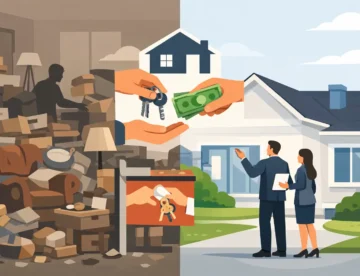
A leaking roof. A house full of inherited furniture. A job transfer that starts in three weeks. Most people do not start looking for a guide to cash home offers because they are curious. They start because the usual way of selling feels too slow, too expensive, or too hard to manage on top of everything else.
If that sounds familiar, you are not alone. Many homeowners in the Twin Cities metro and western Wisconsin are trying to solve a real problem, not chase a perfect sale. They need to move, settle an estate, stop paying for a vacant property, deal with a divorce, or get out from under a house that needs more work than they can take on. In those situations, a cash offer can make sense, but only if you understand how it works and what to watch for.
What a cash home offer really means
A cash home offer means the buyer is purchasing the property without relying on a traditional mortgage. That matters because mortgage financing often adds conditions, appraisals, underwriting delays, and a real chance the deal falls apart before closing.
With a direct cash sale, the process is usually much simpler. The buyer evaluates the house, learns about your timeline, makes an offer, and if you accept, the sale moves toward closing without the same financing obstacles you would see in a standard listing.
That does not mean every cash offer is the same. Some buyers are experienced and ready to close. Others are wholesalers trying to assign the contract. Some may offer speed but not much clarity. The best cash offers combine three things: a fair number, a realistic closing timeline, and a process that does not create new stress for the seller.
Why homeowners choose cash offers
In a perfect world, every seller would have time to clean, repair, stage, list, negotiate, and wait for the highest possible retail buyer. Real life is usually messier than that.
A homeowner going through probate may not live near the property. A family dealing with illness may not have the time or energy for weeks of showings. Someone behind on payments may need a faster answer than the open market can provide. And if a house needs major repairs, the cost to get it listing-ready can erase much of the upside people expect from a traditional sale.
That is where cash buyers come in. They are not offering the same route as an agent-listed home. They are offering a different route entirely – one built around speed, convenience, and certainty.
For many sellers, the real value is not just the purchase price. It is avoiding repairs, cleaning, repeated walkthroughs, financing delays, and the burden of keeping a difficult property going for another two or three months.
Guide to cash home offers: how the process usually works
The process is often more straightforward than people expect. First, you share basic information about the property and your situation. A buyer will usually ask about the home’s condition, location, occupancy, and your ideal timeline.
Next comes a property review. Sometimes that means an in-person visit. Sometimes it starts with photos or a quick conversation. The goal is to understand what repairs or updates are needed and what kind of resale or rental value the property may have after those issues are addressed.
Then the buyer makes an offer. A legitimate cash offer should be clear and easy to understand. You should know whether the property is being purchased as-is, whether closing costs are covered, how quickly the buyer can close, and whether there are contingencies that could change the deal later.
If you accept, the closing process begins. In many direct sales, the timeline can be much shorter than a traditional transaction. Some sellers want to close in a week or two. Others need more time to move out or sort through belongings. A flexible buyer can often work with either timeline.
How cash buyers decide what to offer
This is one of the biggest questions sellers have, and it is fair to ask. Cash buyers do not price homes the same way retail buyers do.
A direct buyer looks at the property’s current condition, the repairs needed, local market value after those repairs, holding costs, closing costs, and the risk involved in taking the property on quickly. If the house has foundation issues, water damage, code problems, liens, or tenant complications, those factors affect the offer.
That can be disappointing if you are comparing the number to a best-case retail listing price. But a listed price is not the same as the amount a seller actually takes home. Traditional sales can come with agent commissions, repair costs, concessions, inspection requests, utilities, taxes, insurance, cleaning, hauling, and the cost of waiting.
A fair comparison is not cash offer versus top neighborhood sale. It is cash offer versus net proceeds, timing, and stress after all the real costs of each path are counted.
When a cash home offer makes the most sense
A cash sale is not automatically the best choice for every homeowner. If your house is updated, you have time, and you are comfortable preparing it for market, listing with an agent may bring a higher price.
But there are situations where a cash offer often fits better. Inherited homes are a common example, especially when the property is outdated or full of personal belongings. Divorce can create a need for speed and simplicity when both parties want a clean resolution. Job relocation can shrink the timeline enough that waiting on the market becomes risky.
Homes with deferred maintenance also tend to be strong candidates for direct sale. If the property needs a roof, furnace, flooring, or major cleanup, many sellers would rather skip the upfront expense and sell as-is. The same is true for vacant houses, rental properties with problems, and homes tied to financial hardship or personal safety concerns.
What to watch for before accepting an offer
Not every buyer who says cash will deliver the same experience. This is where homeowners need to slow down just enough to ask the right questions.
Ask whether the buyer is actually purchasing the property or trying to assign the contract. Ask how soon they can close and whether they have proof of funds. Ask if there are inspection contingencies, partner approvals, or other terms that might let them renegotiate later.
You should also ask what costs, if any, come out of your proceeds. Some sellers assume all cash buyers cover everything, but that is not always the case. A strong offer is not just about the top number. It is about what you will really walk away with and how likely the deal is to close on the promised date.
If the process feels vague, rushed, or full of changing terms, trust that instinct. A solid buyer should be able to explain the offer plainly and give you space to decide without pressure.
Comparing a cash offer to listing the house
The trade-off usually comes down to price versus convenience, but even that is too simple. Time has value. Certainty has value. Avoiding repair costs has value. So does not having strangers walking through your home every weekend.
Listing often makes sense when the home shows well, the seller has flexibility, and the market is strong enough to support a clean sale. A cash offer tends to make more sense when the property has problems, the timeline is tight, or the seller wants a direct path with fewer moving parts.
For some homeowners, the right move is to explore both options briefly and compare the likely net result. That is a practical way to decide without guessing.
A local guide to cash home offers should include one more thing
The buyer should understand the kind of situations real homeowners face, not just the house itself. Selling after a death in the family is different from selling because of relocation. A house tied to deferred maintenance is different from one tied to legal or financial pressure. The numbers matter, but the human side matters too.
That is why many sellers look for a local buyer with a simple process and a clear answer. Companies like Hope Community Investments focus on that kind of sale – fair, fast, and as-is, without asking homeowners to repair the property first or drag the process out.
If you are thinking about a cash sale, the goal is not to force your situation into someone else’s system. It is to find an option that fits your timeline, your property, and your level of stress right now. The right offer should feel clear, realistic, and relieving from the first conversation.