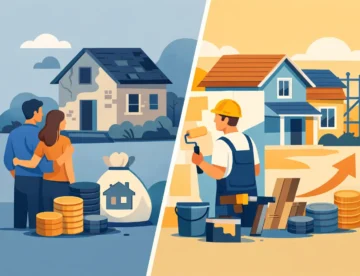
If you need to sell quickly, the question is not just who will buy your house. It is what makes a fair cash offer when time, repairs, and uncertainty are all working against you. That matters even more when you are dealing with a divorce, inherited property, relocation, medical stress, or a house that simply needs more work than you want to take on.
A fair cash offer is not the same as a retail listing price. That is where many homeowners get tripped up. A listed home price usually assumes time, cleaning, repairs, showings, negotiations, and often a buyer who needs financing. A cash offer reflects a different path. It is built around speed, convenience, certainty, and the condition of the property right now.
What makes a fair cash offer in real life?
A fair cash offer starts with the actual market value of the home, but it does not stop there. A serious buyer looks at what similar homes have sold for, the condition of your property, the repairs needed, the neighborhood, and how quickly you want to close. Then they weigh the costs and risks they are taking on by buying the house as-is.
That last part matters. When a cash buyer purchases a home directly, they are usually absorbing the repair burden, carrying costs, resale risk, and the possibility that the house will need more work than expected. If the roof leaks, the furnace is old, or the property has been vacant, those issues affect the number. So does a title problem, code issue, or a timeline that requires a very fast closing.
A fair offer should still make sense to you as the seller. It should be clear, honest, and based on real conditions, not pressure or vague promises. You should understand why the number is the number.
Fair does not always mean highest
This is one of the hardest parts for sellers to sort through. The highest number is not always the best offer if it comes with delays, inspection demands, financing problems, or fees that show up later.
A fair cash offer balances price with certainty. If a buyer can close fast, buy the property as-is, skip repairs, avoid agent commissions, and save you from months of holding costs, that has real value. For some sellers, especially those under pressure, that value is not secondary. It is the whole reason to choose a cash sale in the first place.
For example, a homeowner facing foreclosure may care more about closing in days than waiting for a slightly higher price that may never materialize. Someone managing an inherited house in another state may value simplicity over squeezing out every possible dollar. A family handling a major repair issue may want the relief of being done.
That does not mean you should accept any low offer just because it is cash. It means fairness has to be measured against your situation, not just a number pulled from a listing site.
The key factors behind a fair cash offer
The first factor is after-repair value, or what the home may be worth once it is fully updated and sold in the current market. Buyers use this as a starting point, especially if the property needs work.
The second factor is repair cost. Cosmetic issues like paint and flooring are one thing. Foundation concerns, water damage, outdated electrical, mold, or a failing roof are another. Fair buyers do not ignore these costs, but they also should not inflate them without explanation.
The third factor is selling cost and risk. A direct buyer is taking on closing logistics, carrying costs, possible property taxes, utilities, insurance, cleanup, and market uncertainty. If the home sits longer than expected or needs more repairs than first estimated, that risk belongs to the buyer.
The fourth factor is your timeline. If you need to close in a week, leave unwanted items behind, or avoid repeated walkthroughs, that convenience becomes part of the overall value of the offer. Speed and flexibility are not free, but they can be worth a lot.
What makes a fair cash offer feel fair to a seller?
Most sellers can tell the difference between a legitimate offer and one that feels off. A fair offer usually comes with a straightforward explanation. The buyer should be able to talk plainly about condition, local sales, repair needs, and closing terms.
It also should come without games. If someone quotes a strong number just to get in the door, then cuts it later for avoidable reasons, that is a red flag. The same goes for buyers who avoid specifics, rush you before answering questions, or bury fees in the paperwork.
A fair buyer respects that selling your house is a major decision. You should have room to review the offer, ask what costs are covered, and understand the closing timeline. No-obligation should actually mean no obligation.
Signs an offer may not be fair
Sometimes the problem is not the initial number. It is the way the deal is handled.
Be cautious if a buyer will not explain how they arrived at the price. Be cautious if they promise one thing verbally but write something else into the agreement. And be cautious if they pressure you to sign immediately because the offer will “disappear” in a few hours.
Another warning sign is unclear closing costs. In a direct cash sale, sellers often expect a simple structure. If the offer sounds clean upfront but later includes service fees, surprise deductions, or vague contingencies, fairness starts to disappear fast.
You should also pay attention to proof of funds and track record. A fair offer is only fair if the buyer can actually close. Some buyers tie up properties under contract and then try to assign the deal or renegotiate. That creates more stress, not less.
How sellers can judge whether a cash offer is fair
Start by comparing the offer to your realistic as-is value, not a fully renovated retail price. If your house needs major work, the market will account for that whether you sell to a direct buyer or list it. Looking at recent sales of similar homes in similar condition can help ground your expectations.
Next, look at the net result. If you sold the house the traditional way, what would you likely spend on repairs, cleaning, holding costs, agent commissions, concessions, and extra mortgage payments while waiting for closing? Sometimes a lower cash offer puts more money in your pocket than a higher retail price after everything shakes out.
Then consider the non-financial side. How much is it worth to skip repairs, avoid showings, sell inherited clutter as-is, or move on by a certain date? Those benefits are not abstract when you are living through a difficult transition.
This is where homeowners in the Twin Cities metro and western Wisconsin often appreciate working with an experienced local buyer. A company like Hope Community Investments understands that a fair offer has to solve the real problem, not just produce a number on paper.
Why condition matters so much in a cash sale
In a traditional listing, condition problems often show up later through inspections, lender requirements, or buyer demands for repairs. In a cash sale, those issues are addressed upfront. That can feel tough if the offer comes in lower than hoped, but it also creates honesty early in the process.
If a house has water intrusion, outdated mechanicals, hoarding conditions, smoke damage, or deferred maintenance, a fair buyer will factor those in right away. The upside is that you do not have to fix those problems first. You are trading some potential upside for speed and relief.
That trade-off is not right for everyone. If your house is in great condition and you have time to list, a retail sale may bring more. But if your priority is certainty, convenience, and a fast close, an as-is cash offer can be the more practical path.
The best fair cash offers are simple
Fairness is not just about price. It is about clarity. The strongest cash offers are easy to understand, realistic, and built to close without drama. They account for the property as it sits today, the work it needs, and the timeline you need.
When a buyer is transparent, moves quickly, and gives you a real no-obligation offer without repair demands or hidden costs, that is usually a good sign you are dealing with a serious professional. And when the numbers reflect both market reality and the value of a fast, as-is sale, that is what makes a fair cash offer worth considering.
If you are weighing your options, give yourself permission to look past the biggest headline number and focus on what actually helps you move forward.