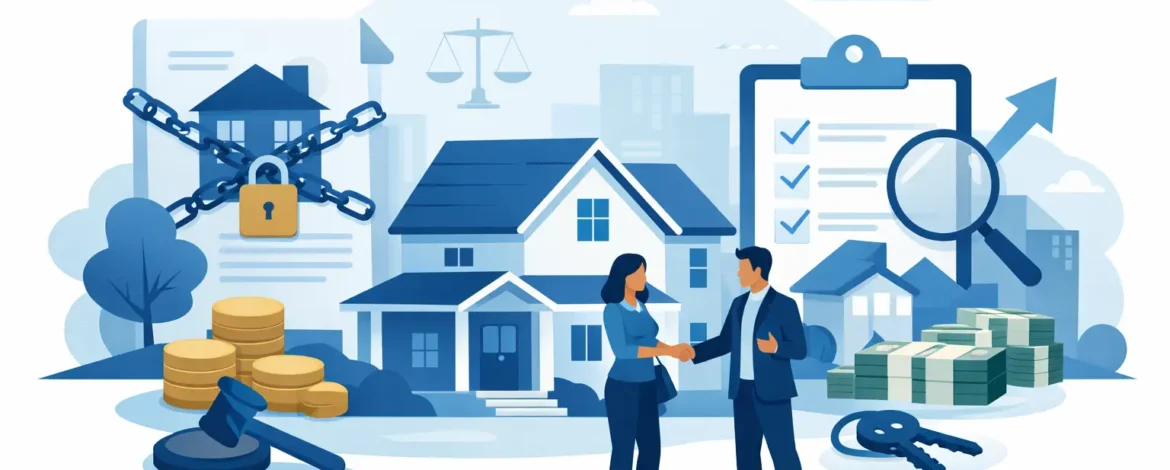
If you’re asking, can I sell house with liens, you’re probably not dealing with a small paperwork issue. Most people start asking this when a bill went unpaid, a legal claim showed up on title, or a life event made an already hard situation feel heavier. The short answer is yes, you can sell a house with liens. The harder part is understanding what has to happen before closing and which sale path gives you the best chance of getting it done without more stress.
A lien is a legal claim against your property. It can come from unpaid property taxes, contractor bills, child support, IRS debt, HOA dues, judgments, or other obligations. In many cases, the house can still be sold, but the lien usually has to be paid, settled, or otherwise cleared as part of the closing process. That is where timing, equity, and the type of buyer matter.
Can I sell house with liens if the title is not clear?
Yes, but not in the same way you would sell a house with clean title and no complications. A lien does not always stop a sale from happening. It does make the sale more complex because the title company will find it, and most buyers will not close until they know how it will be resolved.
In a traditional sale, liens often create delays. A retail buyer may already be nervous about repairs, financing, inspections, and appraisal issues. Add a title problem to that, and the deal can stall quickly. Some buyers back out the moment they hear there is a lien, even if it could be handled at closing.
A direct cash sale can be different. Experienced cash buyers are used to title issues, inherited property complications, and fast-moving situations. That does not mean liens disappear. It means the process is often more flexible, and there may be a clearer plan for resolving them.
What happens to liens when you sell?
Most of the time, liens are paid out of the seller’s proceeds at closing. If your home is worth more than what you owe on the mortgage, liens, and closing costs combined, the title company can often use sale proceeds to satisfy those debts. Once the lienholders are paid, title can transfer to the buyer.
That is the cleanest outcome.
The problem comes when there is not enough equity. If the sale price will not cover everything, the lien has to be negotiated, reduced, released, or addressed another way before the transaction can close. This is where homeowners often feel stuck, but stuck does not always mean out of options.
For example, a contractor lien for disputed work may be negotiable. A tax lien may have a payoff amount that can be requested and confirmed. A judgment lien may require settlement before closing. Each lien type works a little differently, so the answer depends on who filed it, how much is owed, and whether there is enough value in the property to absorb it.
Common liens that can affect a home sale
Not every lien creates the same level of difficulty. A mortgage is technically a lien too, but it is expected and routinely paid off when a home is sold. What causes concern are additional liens that cloud title.
Property tax liens are serious because they usually take priority. IRS liens can complicate timing and paperwork. Mechanic’s liens from contractors can create disputes over what is actually owed. HOA liens can build quietly if dues went unpaid. Judgment liens from lawsuits or unpaid debts can also attach to real estate and surprise sellers who did not realize the property was affected.
If you are not sure what is on title, that is usually the first thing to confirm. You do not want to guess. A title search will show what claims are attached to the property and what has to be dealt with before closing.
Can I sell house with liens for cash?
Yes, and in many cases that is the path with the fewest moving parts.
A cash buyer is not waiting on a lender, and that matters. Traditional financed buyers come with stricter timelines, more conditions, and less tolerance for title complications. If a lien issue takes extra days or calls for a payoff statement, the buyer’s financing window may become part of the problem.
A direct cash buyer can often move faster while the title company works through the lien details. If the numbers make sense, the lien may be paid at closing from the purchase proceeds. If the numbers are tight, a buyer with experience in distressed property situations may still be able to structure a workable timeline while you and the closing team figure out the next step.
That said, cash does not fix negative equity by itself. If you owe more than the house can sell for, the deal still has to be solved on paper. A good buyer can be flexible, but no legitimate buyer can ignore a lien that blocks title transfer.
What if the liens are more than my equity?
This is where the answer becomes, it depends.
If the liens and mortgage balance leave you with little or no equity, you may still be able to sell, but it may require negotiation. Sometimes a lienholder will accept less than the full amount in order to allow the sale to go through. Sometimes the seller brings funds to closing. Sometimes the sale is not realistic until a debt issue is resolved another way.
This is also why speed matters. The longer a property sits, the more pressure can build through missed payments, legal deadlines, interest, penalties, or personal stress. If you already know there are title issues, waiting for the perfect retail buyer can make a hard situation harder.
A straightforward cash offer gives you real numbers to work from. Once you know the likely sale price, the title company can estimate payoffs and tell you whether the transaction is viable as-is or whether more problem-solving is needed.
How the selling process usually works
The first step is to identify the liens clearly. That means pulling title and getting payoff information, not relying on old statements or memory. Once everyone knows what is owed, the next question is whether the sale proceeds can cover those amounts.
If they can, the process is fairly simple. The title company collects the payoff figures, pays the lienholders from closing funds, and issues clear title to the buyer.
If they cannot, there may need to be a negotiation or settlement before closing. This can take time, which is one reason sellers dealing with liens often prefer a buyer who can move on their timeline and buy the home as-is. They do not want to spend weeks fixing up a property, coordinating showings, and hoping a financed buyer stays patient while title gets sorted out.
For homeowners in stressful situations, simplicity matters. A direct buyer may be willing to evaluate the house quickly, make a fair cash offer, and let the title company do the lien work in the background. That does not eliminate the debt, but it can remove a lot of friction.
When a traditional listing may not be your best option
Some homes with liens still sell on the open market. If the house is in great shape, there is plenty of equity, and the lien can be paid easily at closing, listing with an agent may work fine.
But many sellers facing liens are not dealing with just one issue. They may also be handling probate, repairs, relocation, divorce, job loss, or an inherited property they do not want to keep. In those cases, the traditional process can feel like too much. Cleaning out the house, making repairs, scheduling showings, waiting for a buyer, then hoping title problems do not kill the deal halfway through is a lot to carry.
That is where a local cash buyer can make sense. Companies like Hope Community Investments work with sellers who need a faster, cleaner option and do not want to spend money fixing a house they are already struggling to hold onto.
What to do next if you need to sell a house with liens
Start with facts, not worst-case assumptions. Find out what liens exist, how much is owed, and what your property is likely worth in its current condition. From there, compare your options based on time, equity, and stress level.
If you have enough equity and time, a standard sale may still work. If you need speed, certainty, and a buyer who is comfortable with title issues, a cash offer may be the better fit. The key is not waiting too long to find out.
A lien on your house is serious, but it does not automatically mean you are trapped. In many cases, the fastest relief comes from getting clear numbers, working with the right closing team, and choosing a sale path that fits real life instead of adding more delays.